The Water Cycle: Evaporation, Condensation & Precipitation
Earth's endless water journey
Water on Earth moves continuously between oceans, atmosphere, and land in a closed loop called the water cycle. The sun drives this process by heating water until it evaporates into vapor, which rises, cools, condenses into clouds, and falls back as rain or snow. This cycle has been recycling the same water for billions of years.
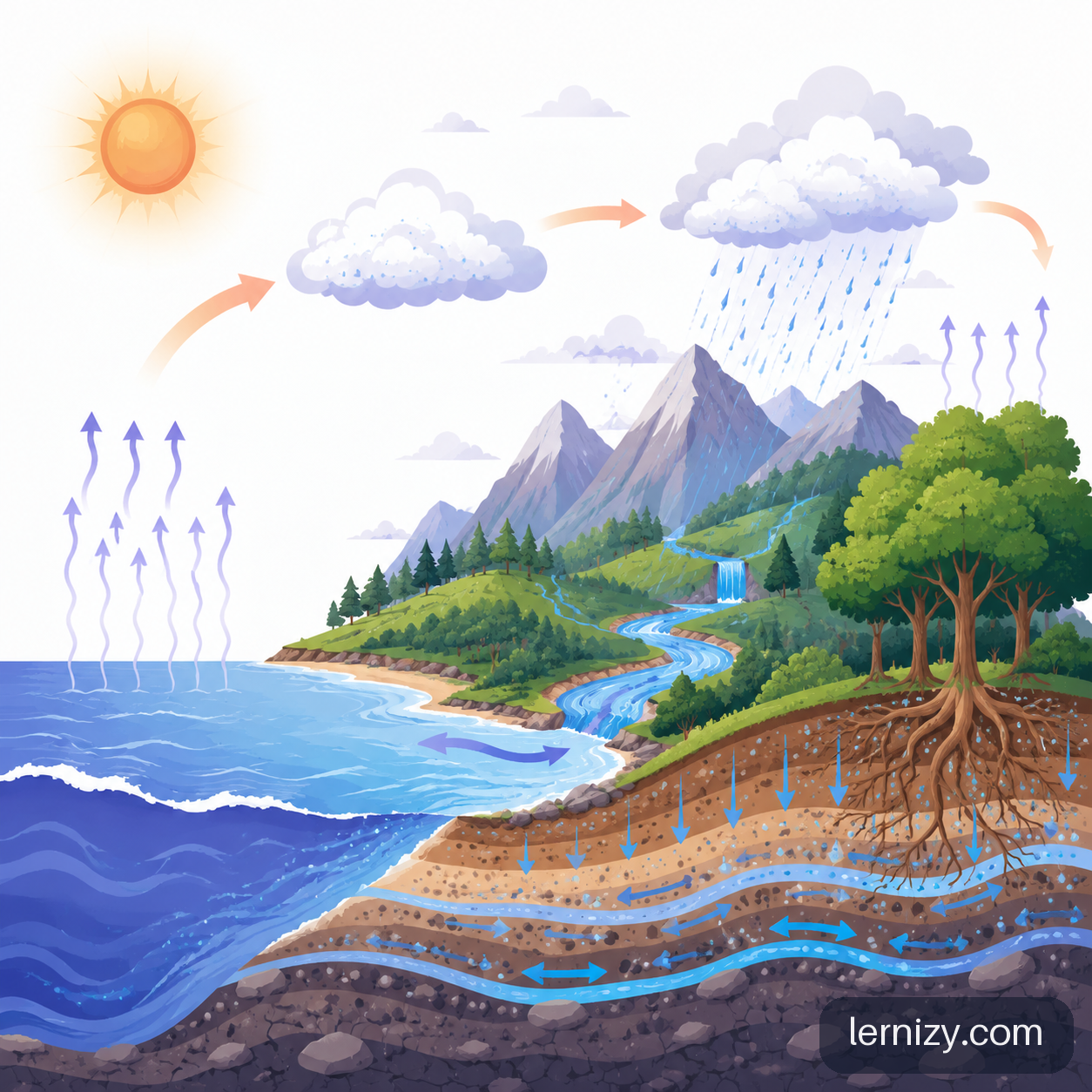
Tap the + pins to see what each part is called
Key Features
Heat from the sun turns liquid water from oceans, lakes, and rivers into invisible water vapor that rises into the air. Warmer temperatures speed up evaporation.
Water vapor cools as it rises and changes back into tiny liquid droplets, forming clouds and fog. This happens because cold air holds less moisture than warm air.
When cloud droplets combine and grow heavy enough, they fall as rain, snow, sleet, or hail. Mountains force air upward, cooling it and causing more rainfall on one side.
Fallen water gathers in oceans, rivers, lakes, and underground aquifers. Some soaks into soil where plant roots absorb it, while the rest flows downhill back to the sea.
Plants pull water from soil through roots and release it as vapor through leaf pores called stomata. A single large tree can transpire hundreds of liters per day.
The Water Cycle
Tap a step to see what happens
Water from oceans, lakes, and rivers turns into water vapor due to heat from the sun.
Breakdown
Did you know?
- • The Amazon rainforest creates half of its own rainfall through transpiration, essentially recycling water locally before it flows to the ocean.
- • Water molecules can remain trapped in deep underground aquifers for thousands of years before resurfacing.
- • During evaporation, salt and other impurities are left behind, which is why rain and snow are naturally distilled and nearly pure.