The Human Brain: Structure, Function & Neural Control
Command center of the nervous system
The human brain is a three-pound organ made of about 86 billion neurons that controls every voluntary movement, processes every sensory input, and generates every thought you have. It sits protected inside the skull, continuously firing electrical signals across synapses to coordinate breathing, heartbeat, memory, emotion, and consciousness. Despite being only 2% of body weight, it consumes roughly 20% of the body's oxygen and glucose.
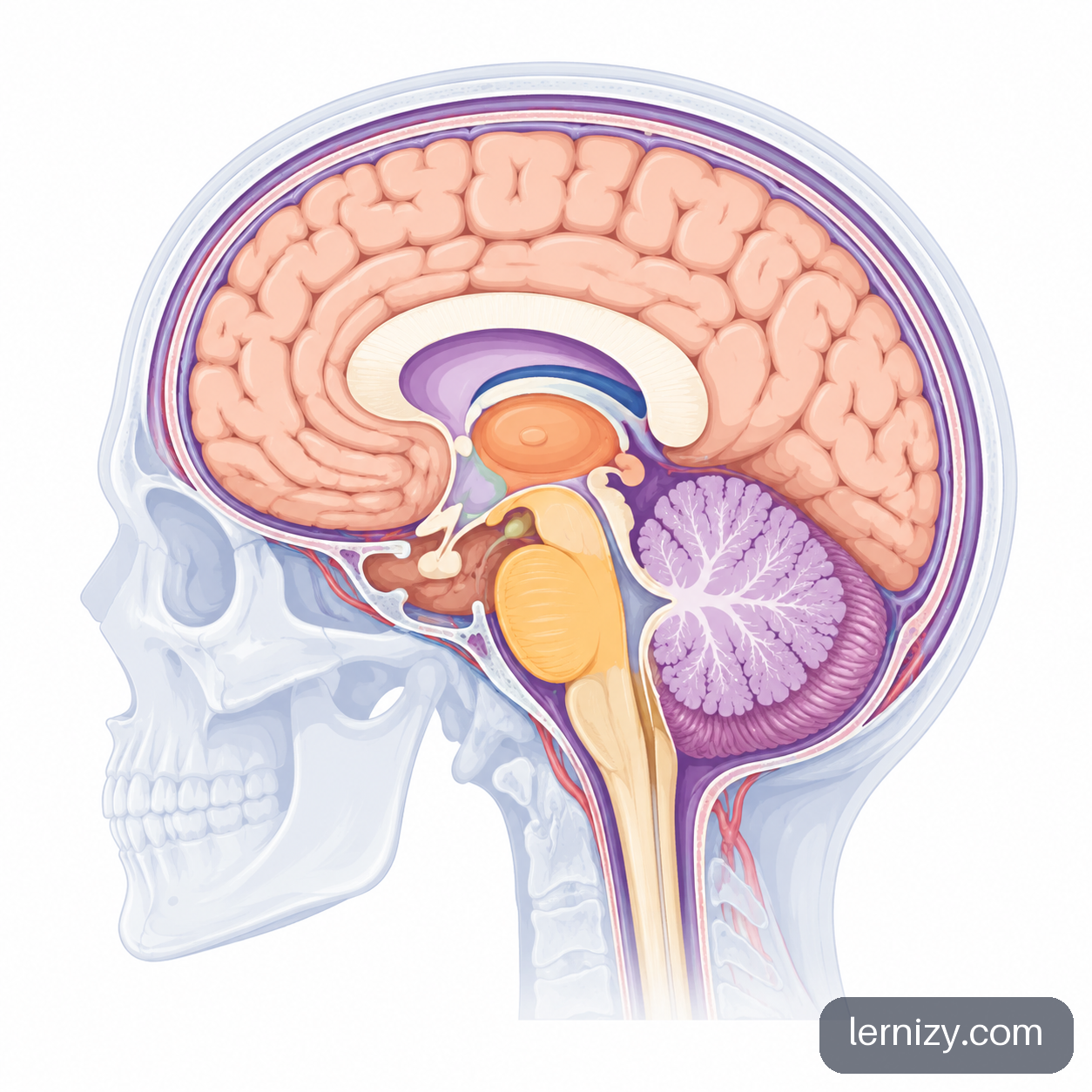
Tap the + pins to see what each part is called
Key Features
The largest part, divided into two hemispheres and four lobes, handles conscious thought, memory, language, sensory processing, and voluntary muscle control.
Located at the back below the cerebrum, it fine-tunes motor movements, maintains posture, and coordinates muscle activity so movements are smooth rather than jerky.
Connects the brain to the spinal cord and controls involuntary functions like heart rate, breathing, blood pressure, and sleep-wake cycles without conscious effort.
Specialized nerve cells transmit information through electrical impulses and chemical neurotransmitters across synapses, forming the basis of all brain activity.
Three protective membrane layers (dura, arachnoid, pia mater) and cushioning fluid surround the brain, absorbing shocks and filtering out pathogens.
Breakdown
Did you know?
- • The left hemisphere typically controls the right side of the body and vice versa because nerve fibers cross over in the medulla.
- • Your brain generates enough electricity while awake to power a small LED bulb, with neurons firing at rates up to 200 times per second.
- • The human brain stops growing around age 25 when the prefrontal cortex (responsible for decision-making and impulse control) fully matures.
- • During REM sleep, your brain is nearly as active as when you're awake, which is why dreams can feel so vivid and real.